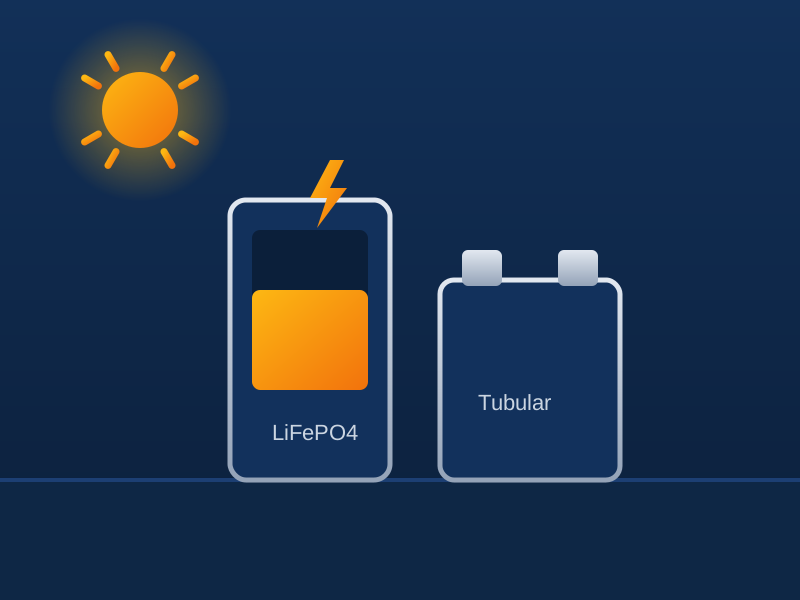
Batteries are where solar systems differ most in lifetime cost. The sticker price misleads; what matters is the cost per kWh delivered over the battery's life.
The four numbers that matter
- Cycle life: LiFePO₄ delivers 6000+ cycles; tubular gel around 1500. That is 16 years vs 4 years of daily cycling.
- Depth of discharge (DoD): lithium happily uses 80–90% of its capacity; lead-acid ages fast beyond 50%. A "200Ah" tubular battery is really a ~100Ah battery in practice.
- Efficiency: lithium returns ~95% of the energy you put in; lead-acid ~80%. The difference is solar energy you paid for and lost.
- Temperature: heat halves lead-acid life every ~8°C above 25°C. Lithium tolerates heat far better.
So why do tubular batteries still sell?
Upfront cost. For small systems, occasional backup, or very tight budgets, a quality gel battery is a legitimate choice — and we stock them. But for daily-cycling homes and businesses, lithium is 2–3× cheaper per stored kWh over its life.
Our rule of thumb
Backup a few hours a week → gel is fine. Cycling every day → LiFePO₄, no contest. Ask us to run the numbers for your usage; the spreadsheet never lies.