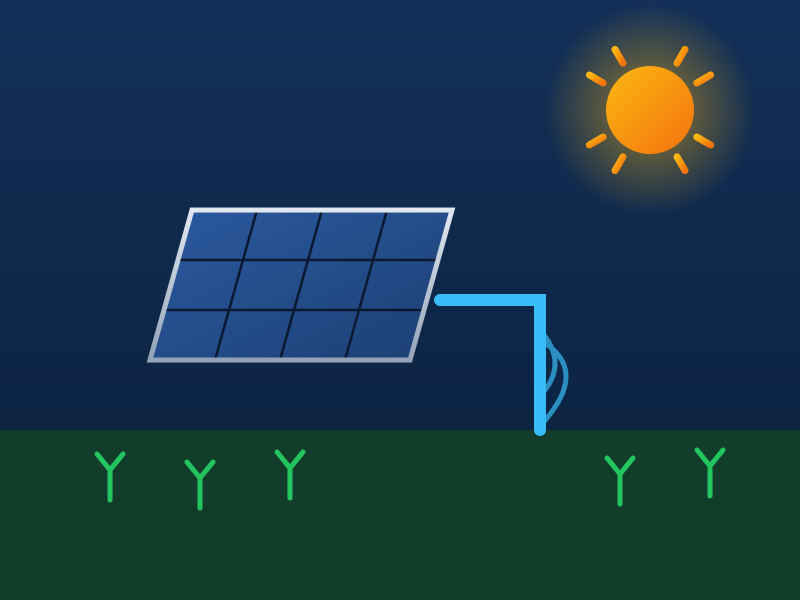
Every solar panel is a sandwich of specially treated silicon. When sunlight strikes it, photons knock electrons loose — this is the photovoltaic effect, discovered in 1839 and now powering hundreds of millions of homes.
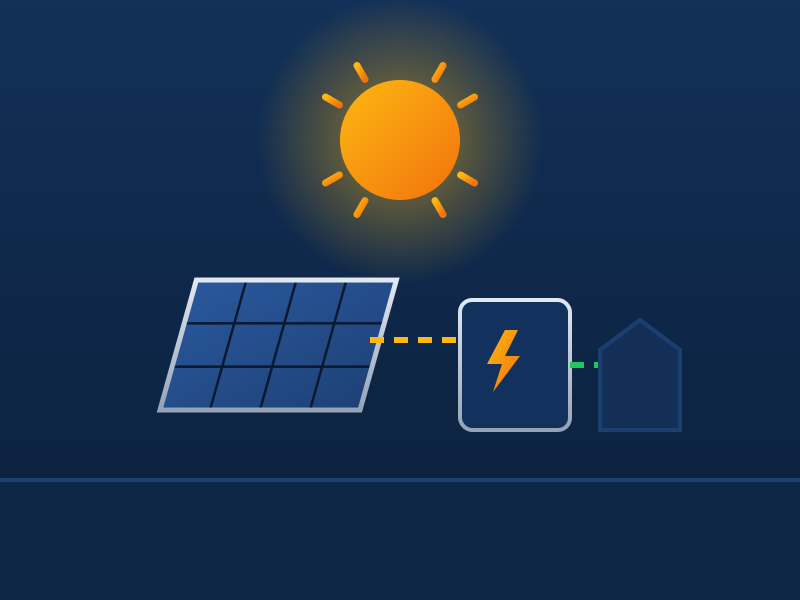
1. Panels create DC electricity
Each cell produces about half a volt. Panels wire dozens of cells in series to reach useful voltages, and arrays wire panels together for real power. Modern mono PERC panels convert over 21% of the sunlight that hits them.
2. The inverter makes it usable
Homes and pumps run on alternating current (AC). The inverter converts the panels' DC into clean AC, while its MPPT (Maximum Power Point Tracker) continuously adjusts to squeeze out every available watt as clouds pass and temperatures change.
3. Loads, battery, and grid
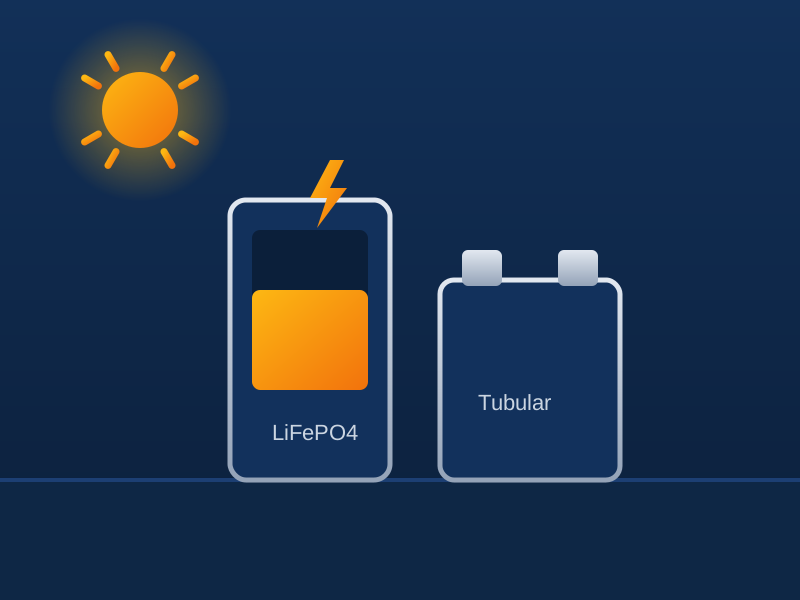
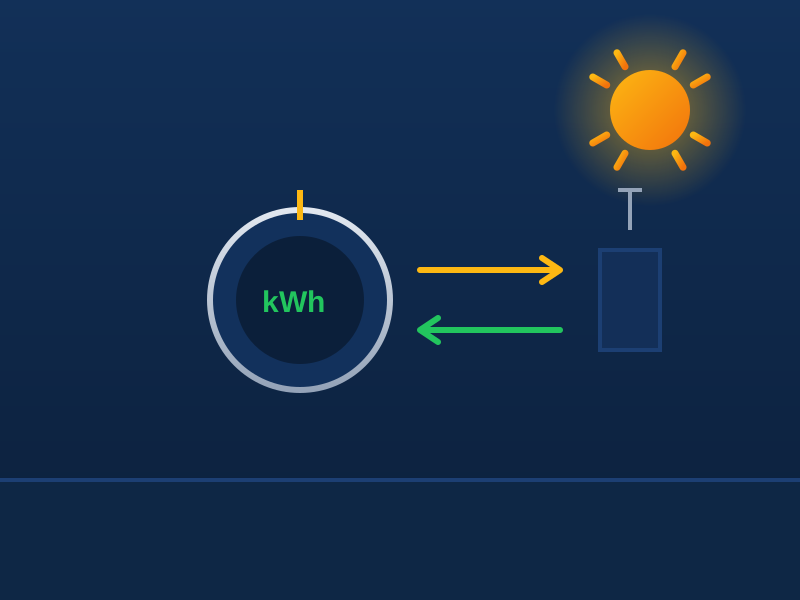
Power flows first to whatever is switched on. Surplus charges the battery (in hybrid systems) or exports to the grid via net metering, earning you credit. At night the battery or grid takes over — seamlessly.
What affects output?
- Orientation & tilt — facing the equator at your latitude angle is ideal.
- Shade — even one shaded cell drags a string down; we design around it.
- Temperature — panels lose ~0.35%/°C above 25°C; airflow behind them matters.
- Dust — a simple monthly rinse recovers 3–8% of production.
Well-designed systems routinely deliver 4+ units (kWh) per kWp per day in sunny climates — which is why a modest rooftop can run an entire home.